

Key Takeaways
Vancouver businesses can stop wasting ad spend by choosing between Instagram and Facebook based on audience demographics, revenue goals, and creative capacity.
- Instagram suits visually driven brands targeting younger urban Canadians, while Facebook performs better for local service businesses and older or suburban audiences across Canada.
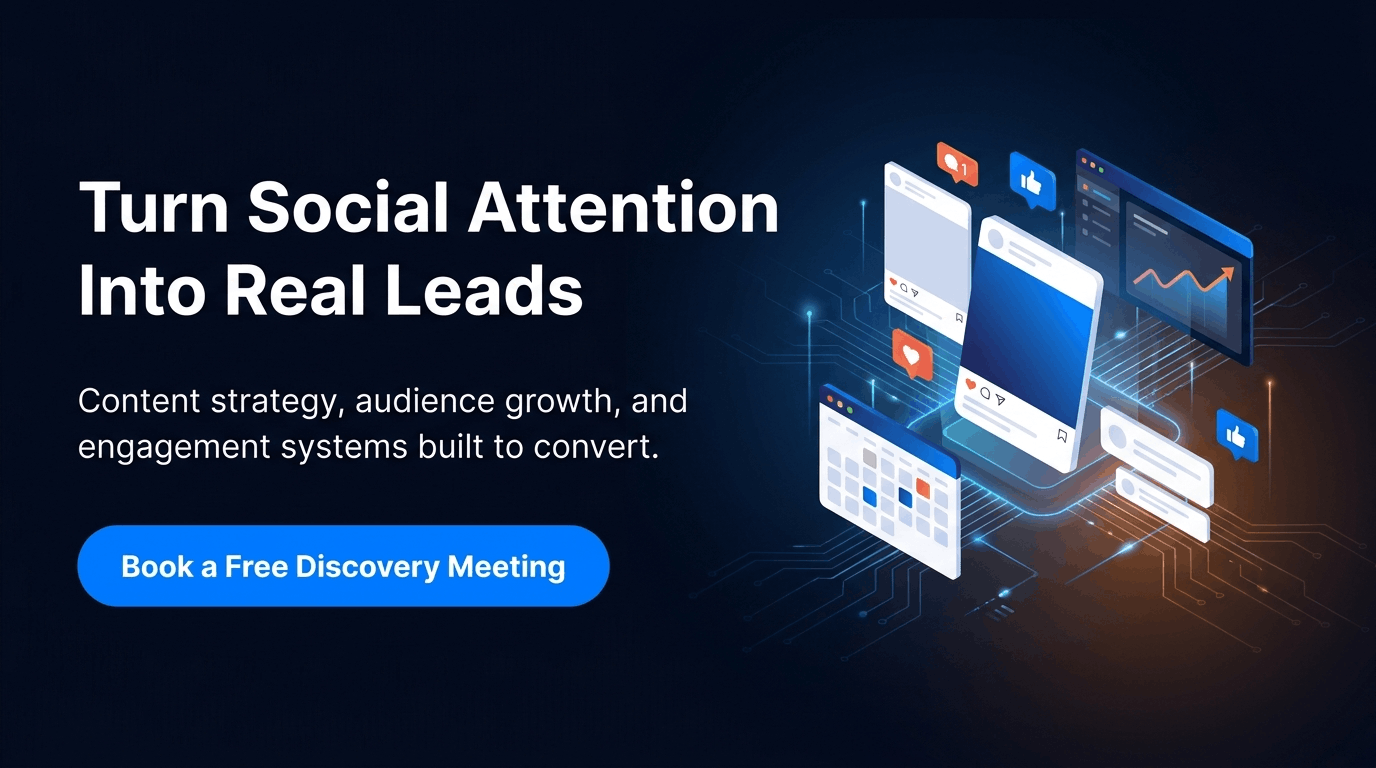
- Instagram offers roughly double the organic reach rate of Facebook at around 3.50%, making it the stronger option for businesses without a dedicated paid advertising budget.
- Facebook ads cost an average of $0.49 per click compared to $1.09 on Instagram, but cost per qualified lead matters more than cost per click when evaluating true return on ad spend.
- Businesses with lean teams typically see better results by committing fully to one platform rather than splitting effort across both and doing neither well.
- Before allocating budget, audit your existing website analytics, CRM data, and competitor activity to identify which platform already aligns with your audience and conversion path.
For Vancouver businesses trying to grow through social media, choosing between Instagram and Facebook is not just a matter of preference. It is a financial decision with real consequences for revenue, ad spend, and team time. Choosing the wrong platform means publishing content that reaches the wrong audience, running ads that underperform, and tracking vanity metrics instead of sales.
This guide breaks down the key differences between the two platforms, maps each to specific business goals, and gives Canadian businesses a clear framework for deciding where to invest. Whether you manage your own campaigns or work with a digital marketing partner, the goal is simple: stop guessing and start putting your budget where it will actually generate customers.
Which Platform Is Better for Business: Instagram or Facebook?
Instagram tends to work better for product discovery, visual brands, and reaching younger urban audiences. Facebook tends to work better for community building, local service businesses, and reaching older or rural Canadians. The best choice depends on your revenue goal, your audience, and your creative capacity.
The broader context of choosing social media platforms for business has grown more complex as both platforms have matured. Each now plays a distinct role in the customer journey, and conflating the two leads to strategies that are neither fully optimised for awareness nor for conversion. Understanding those distinct roles is where a strong social media strategy begins.
Key Differences Between Instagram and Facebook for Business
The differences go well beyond interface design. Facebook, with its text-heavy posts, event features, community groups, and news-feed structure, attracts users who are in an information-seeking or community-engaging mindset. Instagram is built around visual content and discovery, where users scroll to be inspired, find new products, and engage with brands aesthetically. These behavioural differences directly affect what content works, which industries benefit most, and how purchase decisions are influenced on each platform.
Audience Demographics: Who Uses Each Platform in Canada?
Facebook skews toward older users and remains the dominant platform in rural and suburban communities across Canada, according to findings from Pew Research Center. Instagram attracts a younger, more urban audience and has reached approximately 1.5 billion monthly active users globally, according to Statista.
For a Vancouver-based business targeting millennial or Gen Z consumers, whether operating in Kitsilano, Mount Pleasant, or the Downtown core, these demographic realities carry real strategic weight. For a business serving a broader or older customer base across Metro Vancouver or elsewhere in British Columbia, Facebook’s reach into suburban and rural communities may be the stronger fit.
Organic Reach: Which Platform Gives You More Visibility?
Organic reach on Facebook has declined dramatically over the past decade and the algorithm increasingly prioritises paid content and personal connections over brand pages. Instagram has historically offered better organic visibility, though that advantage is narrowing. According to Social Insider, Instagram’s average reach rate sits at around 3.50%, which is roughly double Facebook’s rate, though Instagram itself has seen a 12% year-over-year decline. For businesses without dedicated paid budgets, Instagram still offers the more realistic path to organic discovery.
Creative Requirements: What Each Platform Demands
Instagram is one of the most visually demanding platforms in social media. Reels, Stories, and carousel posts all require consistent investment in photography, video, and design, and audiences disengage quickly from content that feels low-effort or off-brand. Facebook is more forgiving. A well-written post, a clear event announcement, or a community discussion can perform well without polished production. Businesses with limited creative resources should factor this into their platform decision before committing budget.
| Factor | ||
|---|---|---|
| Primary audience (Canada) | Younger, urban (Millennials, Gen Z) | Older, suburban and rural Canadians |
| Organic reach rate | ~3.50% (per Social Insider) | Lower than Instagram; declining |
| User mindset | Discovery, inspiration, visual browsing | Information-seeking, community engagement |
| Creative requirements | High: polished photo, video, and design | Medium: text posts, events, and discussions can perform well |
| Community features | Limited: comments, DMs, and Stories | Strong: Groups, Events, and local targeting |
| Best for | Product discovery, visually driven brands | Local services, repeat engagement, B2B credibility |
Matching the Right Platform to Your Business Goal
Different revenue goals call for different platform strengths. The right starting point depends on what you are trying to achieve and who you are trying to reach.
- E-commerce and product discovery: Instagram’s visual format and shopping features align more closely with the path to purchase.
- Local service businesses: Facebook’s event features, local groups, and neighbourhood-level targeting support community awareness, particularly useful for businesses serving Burnaby, Richmond, or the North Shore.
- B2B and professional services: Facebook’s longer-form content capabilities support credibility building better than Instagram’s image-first environment.
- Visually driven services (fitness, interior design, fashion): Instagram reaches younger audiences who respond to visual storytelling.
- Financial planning, home renovation, and healthcare: Older decision-makers in these categories tend to engage more on Facebook.
Identifying which scenario fits your business before spending on ads is one of the most efficient decisions you can make.

Community vs. Discovery: A Revenue-Focused Comparison
Facebook is built for community. Groups foster ongoing conversations, events drive repeat engagement, and the newsfeed rewards consistent posting to a warm audience. If your revenue model depends on repeat customers, referrals, or loyalty, Facebook’s community features are genuinely difficult to replicate on Instagram.
Instagram is built for discovery. The Explore page, Reels recommendations, and hashtag search surface your content to users who have never encountered your brand before. According to Selfstartr, around 68% of Instagram users regularly interact with brands, compared to roughly 32% on Facebook. That gap signals Instagram’s stronger potential for converting first impressions into engagement and, eventually, into sales, making it more effective for new customer acquisition in visually driven categories.
Paid Advertising Costs: Instagram vs Facebook
When it comes to paid ads, the cost difference is worth understanding before you commit budget. According to Social Insider, the average cost per click for Facebook ads is around $0.49, compared to approximately $1.09 for Instagram ads. For businesses with tight budgets prioritising click volume, Facebook offers a more efficient entry point. However, Instagram’s higher engagement rates can translate into stronger conversion quality, particularly for brands where visual appeal drives purchase decisions. The more meaningful metric to track is cost per qualified lead, not simply cost per click.
Because both platforms run through Meta’s unified ads manager, campaigns can be run simultaneously with shared creative assets and a single budget. An AI-powered approach can test audience segments, creative formats, and bidding strategies across both platforms, then shift budget dynamically toward whichever delivers the stronger return. According to WordStream, 86% of marketers use Facebook for business marketing while 79% use Instagram, suggesting most professionals see value in maintaining a presence on both rather than making a binary choice.
| Metric | ||
|---|---|---|
| Average cost per click | ~$0.49 (per Social Insider) | ~$1.09 (per Social Insider) |
| Relative cost efficiency | Lower cost per click | Higher cost per click |
| Engagement quality | Lower average engagement rates | Higher engagement rates |
| Best suited for | Budget-conscious campaigns, click volume | Visually driven brands, conversion quality |
| Marketer adoption | 86% of marketers (WordStream) | 79% of marketers (WordStream) |
| Campaign management | Both managed through Meta’s unified ads manager | |

Should Your Vancouver Business Be on Both Platforms?
This is as much a resource question as a strategy question. Running two active, high-quality social presences simultaneously requires creative production, community management, paid campaign oversight, and performance analysis. For businesses with lean teams and limited budgets, splitting attention across both platforms often means doing neither well. A focused single-platform strategy consistently outperforms a diluted dual-platform effort.
A practical framework for Canadian businesses:
- Identify your primary conversion goal and most valuable customer segment.
- If the goal is new customer acquisition for a visually driven product or service in an urban market like Vancouver, start with Instagram.
- If the goal is repeat engagement, community trust, or reaching a broader demographic including older or rural Canadians, start with Facebook.
- Once that foundation is generating measurable returns, expand to the second platform with a clear brief and dedicated budget.
What to Check Before You Commit Your Budget
Before allocating meaningful budget to either platform, audit the data you already have. Review your website analytics to see where existing social traffic originates and which channel produces the lowest bounce rate. Check your email list or CRM for demographic signals that point toward one platform’s audience profile. If competitors are running active paid campaigns on a specific platform, that is worth investigating, though it does not automatically mean you should follow the same strategy.
Testing with a small, controlled ad budget before scaling is consistently the most reliable way to gather platform-specific performance data for your audience and offer. Questions around when should a business use instagram and when should a business use facebook rarely have universal answers. They depend on your margins, your creative capacity, and your customer’s path to purchase. When ad spend directly impacts revenue, working with a specialist who can interpret campaign data and adjust strategy in real time is often more cost-effective than managing platform decisions in-house.
If you are ready to move beyond guesswork and build a social media strategy anchored in data and revenue outcomes, Leadsagna’s team in Vancouver is here to help. Reach out to find out how an AI-powered approach to Meta platform planning can identify exactly where your budget will work hardest.
Frequently Asked Questions About Instagram vs Facebook for Business
Is Instagram or Facebook better for a small business in Vancouver?
It depends on your audience and offer. Instagram suits product-driven or visually oriented businesses targeting younger urban customers, while Facebook tends to perform better for local service businesses and older demographics. A small business with limited resources is usually better served by committing fully to one platform rather than dividing effort across both.
Which platform has lower advertising costs: Instagram or Facebook?
Facebook has a lower average cost per click, roughly $0.49 compared to $1.09 on Instagram. That said, lower cost per click does not always mean better value. Instagram’s higher engagement rates can produce stronger conversion quality for visually driven brands, so cost per qualified lead is the more meaningful number to track.
Can I run ads on both Instagram and Facebook at the same time?
Yes. Both platforms operate through Meta’s unified ads manager, which lets you run campaigns across both simultaneously using shared creative assets and a single budget. This also makes it straightforward to test performance across platforms and shift spend toward whichever delivers stronger results.
Which platform is better for organic reach without paid advertising?
Instagram currently offers better organic reach than Facebook for business pages, with an average reach rate of around 3.50%. That said, Instagram’s organic reach has also declined year over year, so businesses relying solely on unpaid content should set realistic expectations on both platforms.
How do I decide which platform to prioritise first?
Start by identifying your primary revenue goal and customer profile. If you are focused on acquiring new customers in a visually driven category and your audience skews younger and urban, prioritise Instagram. If community trust, repeat engagement, or reaching older or suburban Canadians matters more, start with Facebook. Expand to the second platform once the first is generating consistent, measurable returns.


