


Key Takeaways
A structured SEO content strategy connects what buyers search for to what you sell, turning organic traffic into qualified leads and consistent revenue.
- Content that drives revenue is built around buyer intent at every stage of the journey, from awareness through to decision, not just around high traffic keywords.
- Audience specificity matters more than publishing volume. Generic content written for everyone converts no one, especially in the Canadian market where local buyer language and context shape search behavior.
- A topic cluster approach, where pillar pages are supported by related subtopic articles, builds topical authority and creates a natural path that moves visitors toward a commercial outcome.
- Keyword mapping assigns distinct keyword clusters to individual pages, preventing internal competition and concentrating authority where it produces the strongest ranking potential.
- Content strategy is a living system. Monthly and quarterly review cycles that track qualified traffic, lead completions, and assisted conversions keep the content library focused on assets that contribute directly to sales.
An SEO content strategy is a structured system that connects what your audience searches for to the products and services you offer, guiding real buyers through a journey that ends in a conversion. For Vancouver business owners growing through organic search, the difference between content that ranks and content that generates revenue comes down to how deliberately that system is built. According to BrightEdge, organic search accounts for around 53% of all website traffic, making it the single largest channel available to any business investing in long-term growth.
At Leadsagna, we approach SEO for business the way an engineer approaches a system: every component has a function, every decision is backed by data, and the final measure of success is not rankings or pageviews. It is qualified leads and sales. This article walks through how a properly built content strategy works, why so many fall short, and what business owners in Vancouver and across the Lower Mainland can do to close that gap.
Why Most SEO Content Strategies Fail to Generate Revenue
The most common reason content strategies stall is that they are built around the wrong success metrics. Traffic numbers look encouraging in a dashboard, but visitors with no intention of buying mean very little to a business with a sales target.
A second failure point is the lack of audience specificity. Generic content written for everyone resonates with no one. Vancouver businesses often receive SEO advice calibrated to much larger markets, which means the keyword targets, tone, and examples have no relevance to how a local buyer actually searches or decides. When content is not built around the language and decision triggers of your actual customers, organic traffic will arrive and leave without converting.

What a Structured SEO Content Strategy Actually Includes
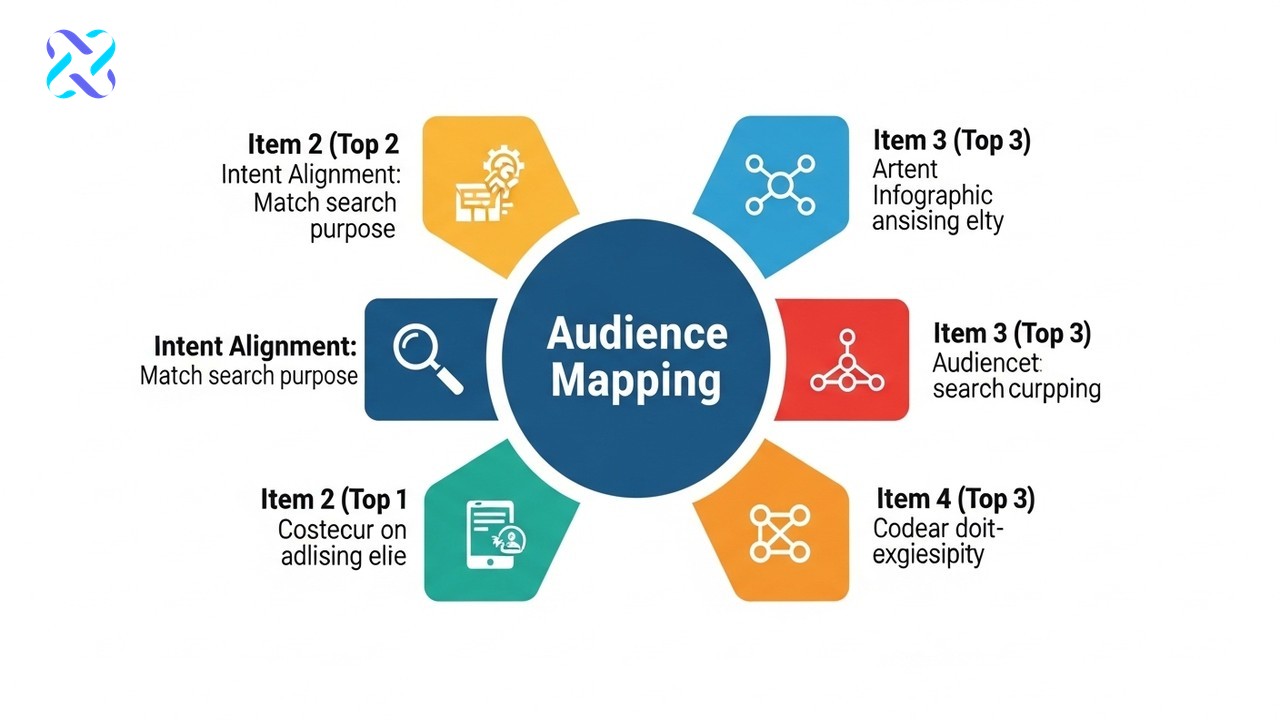
A structured SEO content strategy goes well beyond a keyword list. It is built on four core components: audience mapping, intent alignment, content architecture, and conversion pathways.
Audience mapping means understanding who you are writing for, what problems they need to solve, and at what stage of awareness they find your content. Intent alignment ensures each piece of content serves what a searcher is actually trying to accomplish, not just what a business wants to promote. Content architecture creates the connective tissue, through internal linking and topic structure, that turns individual pages into a network with real topical authority. Conversion pathways ensure readers who are ready to act know exactly what to do next.
This is what separates strategic content planning from ad hoc blogging. A properly structured approach builds assets that grow in authority over time, generate traffic consistently, and move readers toward a commercial outcome.
| Component | What It Does | Business Outcome |
|---|---|---|
| Audience Mapping | Identifies who you are writing for and at what stage of awareness | Content reaches the right buyers, not just random visitors |
| Intent Alignment | Matches each page to what a searcher is actually trying to accomplish | Reduces bounce rate and improves time on site for qualified visitors |
| Content Architecture | Creates internal linking and topic structure across the site | Builds topical authority and helps Google understand site relevance |
| Conversion Pathways | Guides readers who are ready to act toward a clear next step | Turns organic traffic into leads and sales |
Understanding Search Intent and Why It Shapes Every Content Decision
Every search query carries an intent. Informational queries signal that a user wants to learn. Navigational queries mean they are looking for a specific site. Commercial queries indicate a buyer researching options before committing. Transactional queries signal readiness to act now.
Matching content type to the correct intent is not a technical detail. It is a fundamental requirement. If a buyer searching for pricing lands on a general educational post, they will leave and find a competitor whose page answers their actual question. Intent alignment shapes every decision about format, depth, and calls to action.
Google’s own SEO Starter Guide reinforces that content must serve the reader’s needs, not just target a keyword. Building intent into your strategy from the start is what transforms a content calendar into a system with measurable outcomes.
How Content-Led SEO Maps to the Buyer’s Journey
Content-led SEO works by aligning content formats with specific stages of the buyer’s journey. Awareness-stage content attracts people who know they have a problem but are not yet searching for a solution. Consideration-stage content serves buyers evaluating their options. Decision-stage content, including service pages, case studies, and pricing guides, speaks to people ready to act.
When these three layers are built deliberately and interlinked with purpose, the result is a system that captures demand at every stage and moves users progressively toward a conversion. Publishing content at only one stage and hoping visitors find their way is far less effective.
| Buyer’s Journey Stage | Search Intent Type | Content Format | Goal |
|---|---|---|---|
| Awareness | Informational | Blog posts, guides, explainer articles | Attract buyers who know they have a problem |
| Consideration | Commercial | Comparison pages, how-to content, FAQs | Serve buyers evaluating their options |
| Decision | Transactional | Service pages, case studies, pricing guides | Convert buyers who are ready to act |
Building Your Content Strategy Around Business Goals
The most productive starting point is an audit of what already exists. Before creating anything new, identify which pages attract traffic, which attract traffic that converts, and where the gaps are between what you publish and what your buyers are searching for. A content gap analysis surfaces those gaps and prioritises topics by revenue potential rather than raw search volume.
From there, organising content around business goals means assigning priorities based on commercial impact. A page targeting a buyer-ready keyword close to a purchase decision is worth more than a high-traffic page that attracts curious readers with no buying intent. A topic cluster strategy, which structures content around central pillar pages supported by related subtopic articles, reinforces topical authority in Google’s eyes and creates a natural pathway for visitors to deepen their engagement. Building the architecture this way ensures the website works as a sales asset, not just a publishing channel.

Keyword Targeting That Reflects How Vancouver Buyers Actually Search
Keyword selection is where many strategies make a critical error. Industry terminology often dominates keyword lists because it is familiar to people inside a business, but buyers rarely search the way insiders speak. A well-built strategy is grounded in buyer language: the phrases, questions, and comparisons a real customer types when trying to solve a problem.
In a competitive market like Vancouver, where businesses in areas such as Gastown, Yaletown, Kitsilano, and Burnaby are all vying for the same local buyers, commercial intent keywords deserve priority over purely informational terms. These are the phrases that signal a buyer is evaluating options or preparing to spend, rather than simply researching a topic with no near-term purchase intention.
Investment level also matters. Research from Siege Media suggests that companies spending meaningfully more per content piece are more likely to report strong results from their content strategy. That pattern reflects the difference between content designed to rank and convert versus low-cost filler that satisfies a publishing schedule without earning authority or trust.
What Keyword Mapping Does for Your Site’s Authority
Keyword mapping is the practice of assigning specific keyword clusters to individual URLs so that each page has a clear, singular purpose in search. Without this structure, multiple pages on the same site can compete against each other for the same query, a problem known as keyword cannibalisation, which dilutes authority rather than concentrating it. Proper keyword mapping ensures every page targets a distinct cluster of related terms, strengthening both individual ranking potential and the site’s overall topical authority.
Using AI and Data to Make Smarter Content Decisions
AI-powered analysis has changed what is possible in content strategy. Tools that process large volumes of search data can identify opportunities manual research would miss, detect shifts in how users phrase their searches before those shifts appear in standard keyword tools, and model which pages carry the strongest potential for ranking improvement.
Rather than relying on intuition, a data-informed approach treats content decisions as repeatable, testable hypotheses. Content optimisation, the ongoing process of improving existing pages based on performance data, is a core part of this cycle. An SEO content strategy is not a one-time project. It is a living system that produces better results as more data accumulates. When thought leadership content is maintained strategically over time, the compounding effect on organic visibility can be substantial, reflecting how well-maintained content tends to grow in authority rather than decay.

Measuring Whether Your SEO Content Strategy Is Working
The metrics that matter for a business owner are different from those that look impressive in an agency report. Rankings and pageviews tell you something about visibility, but they say nothing about whether your content is contributing to pipeline.
The metrics that connect content to revenue are qualified traffic from commercial-intent queries, lead form completions attributed to organic sessions, and assisted conversions showing how content influenced a sale even when it was not the final touchpoint before purchase. Tracking these figures requires proper analytics configuration, goal tracking, and ideally a connection between your CRM data and web analytics.
A simple review cycle keeps this manageable. Monthly, identify which pages generate qualified traffic and which attract high volumes of visits with low engagement or zero conversions. Quarterly, decide which underperforming pages to update, consolidate, or remove. This rhythm keeps the content library focused on assets that contribute to the business. The Content Marketing Institute has consistently found that organisations with a documented content marketing strategy report stronger results, which reflects how central structured planning has become among businesses generating consistent organic growth.
When to Manage SEO Content In-House and When to Bring in Help
Managing a content strategy in-house is realistic when a business has a team member with genuine SEO expertise, the time to execute consistently, and access to proper keyword research, performance tracking, and content auditing tools. When any one of those conditions is missing, the strategy tends to drift toward ad hoc content production, which rarely achieves the compounding returns that structured organic content planning delivers.
If you are evaluating outside help, look for proof of process rather than promises. A credible agency should be able to show you a documented methodology, explain how they measure content performance against business goals, and demonstrate reporting that connects organic activity to revenue outcomes.
At Leadsagna, every engagement begins with understanding what a client’s sales look like, not just their rankings. If your Vancouver business is generating traffic that does not convert, or if you are starting from scratch and want to build something that compounds over time, we are ready to show you exactly how that system works.
Frequently Asked Questions About SEO Content Strategy
What is the difference between an SEO content strategy and a regular content plan?
A regular content plan organises what you publish and when. An SEO content strategy goes further by aligning every piece of content with specific search queries, buyer intent, and conversion goals. It includes keyword mapping, topic clustering, and performance measurement tied to revenue, not just publishing frequency.
How long does it take for an SEO content strategy to produce results?
Most businesses begin seeing measurable organic traffic improvements within three to six months, with more significant revenue impact typically appearing between six and twelve months. Results depend on market competitiveness, content quality, and how consistently the strategy is executed.
How many pieces of content do Vancouver businesses need to see results?
There is no universal number. A focused strategy targeting ten to fifteen well-researched, intent-aligned pages can outperform a site with hundreds of low-quality posts. Quality, strategic structure, and internal linking matter far more than volume alone.
Can existing content be improved, or does a strategy require starting from scratch?
Existing content is often an underutilised asset. A content audit can identify pages with untapped ranking potential, pages that cannibalise each other, and pages that should be consolidated or removed. Starting from scratch is rarely necessary and often less efficient than optimising what already exists.
What makes an SEO content strategy effective for local Vancouver businesses specifically?
Local effectiveness depends on using the language and search patterns of Vancouver buyers, targeting commercial intent keywords relevant to the neighbourhoods and industries you serve, and building content that signals geographic relevance to Google. Generic national or global strategies often miss the specificity that local search requires.


